


COOU’s Leadership Conundrum: When Appointments Undermine Accountability
By Gerald Okoye
Chukwuemeka Odumegwu Ojukwu University is caught in a governance crisis that new appointments have deepened, not solved.
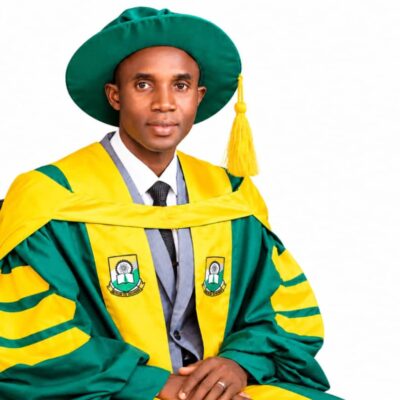
The recent removal of the Governing Council Chair, the controversial appointment of a Vice Chancellor who placed 5th in the selection process, and the naming of her referee as Chancellor have raised questions of due process, conflict of interest, and institutional credibility.
These moves sit atop unresolved allegations of financial misconduct, academic fraud, and record falsification.
For COOU to regain public trust, the Visitor must prioritize respect for rules and transparent reforms over ceremonial appointments.
Appointments and Council Shake-Up
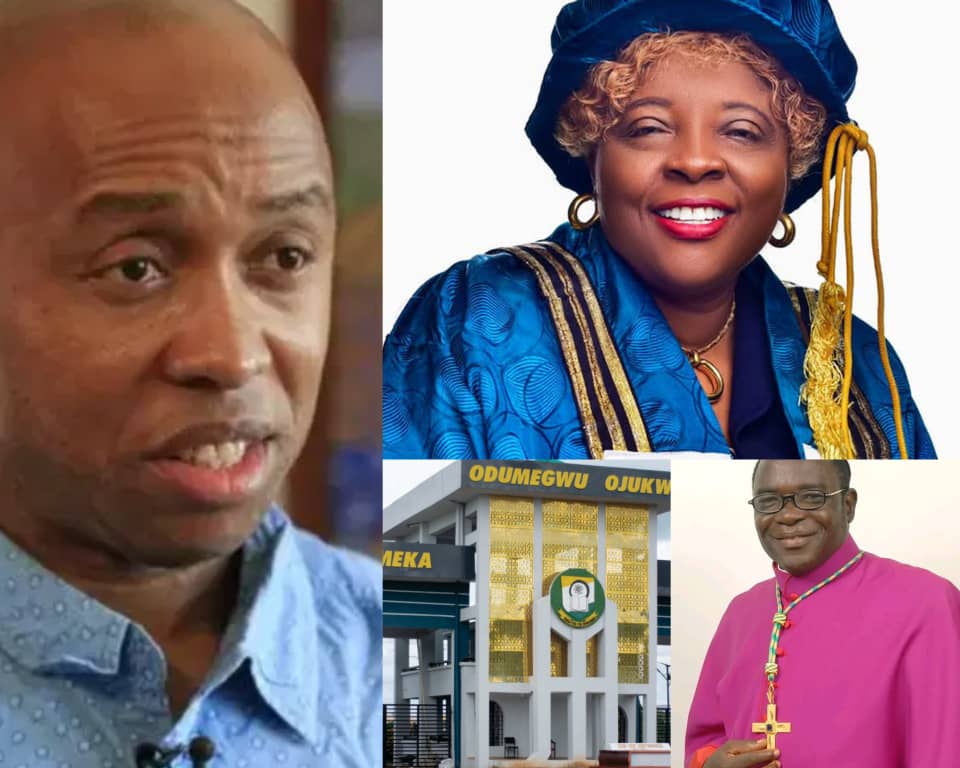
On the 21st of April 2026, Governor Chukwuma Soludo, acting as Visitor to COOU, appointed Most Rev. Dr. Mathew Hassan Kukah, Catholic Bishop of Sokoto Diocese, as Chancellor of the University.
This announcement followed the dissolution and reconstitution of the University’s Governing Council.
Prof. Chidi Odinkalu, who served as Pro-Chancellor and Council Chairman, was removed along with other government appointees.
The law establishing COOU provides for a 4-year non-renewable tenure for government appointed Council members. Odinkalu’s team had served 22 months.
The reconstituted Council retained nearly all former members. Those reappointed include AIG Chris Ezike (Rtd), Chief Ndubuisi, and Igwe Chidume Oranu, while the two notable exits were Prof. Odinkalu and Amb. Bianca Odumegwu-Ojukwu.
Vice Chancellor Selection That Won’t Go Away
Between January and August 2025, the Odinkalu-led Council conducted the selection process for a substantive Vice Chancellor.
At the end of the process, the three shortlisted candidates finished in the following order, Prof. Chike Osegbue, 1st; Prof. Leonard Onuba, 2nd and Prof. Chudi Okani, 3rd.
On Aug. 4, 2025, Gov. Soludo announced Prof. Omenugha as substantive VC.
The appointment bypassed the top three candidates and triggered immediate criticism from sections of academia, alumni, and civil society.
A suit challenging the legality of the appointment is now pending before the National Industrial Court. Until the court rules, the VC serves under a cloud of litigation.
The VC who serves under a cloud of litigation (has proceeded to suspend initially for three months and extended the suspension of Prof. Chike Osegbue for another three months for allegedly not teaching and examining a Postgraduate course PSC 811.
Osegbue claims he refused to teach and examine students who were admitted one week to the exam because it violates the Postgraduate school Academic Regulations.
The University community remains polarised, with staff unions and student groups issuing conflicting statements on the state of the university.
The Optics: Referee Becomes Chancellor
Bishop Kukah was listed as a referee to Prof. Omenugha during the VC selection process. With his appointment as Chancellor, the University’s ceremonial head and its chief executive now have a documented mentor–mentee link from a contested process.
Meanwhile, the Council Chair who supervised that process has been removed 26 months before the end of his statutory term. The sequence has created a strong perception of conflict of interest.
Critics argue it rewards loyalty over process and sidelines the one actor with no personal stake in the outcome.
Institutions survive on public trust. When appointments appear to validate contested outcomes, that trust erodes. The question is no longer just who occupies the office, but whether the process that put them there can withstand scrutiny.
Beyond Appointments: COOU’s Structural Deficits
Leadership changes have dominated headlines, but COOU’s core problems are operational and systemic but takeholders consistently cite governance and finance, allegations of contract diversion and inflation in capital projects, lack of/poor budgeting and disregard to Council oversight function, use of the office of VC to benefit family and friends.
On academic integrity, there have been persistent claims of admission racketeering across departments, certificate racketeering which undermine the value of COOU degrees in the labor market.
In the area of infrastructure and services, lecture halls, hostels, and laboratories on multiple campuses are dilapidated and grossly inadequate.
There are also claims of exploitative ICT fees with unreliable services for students.
In human capital, there are general complaints of low staff morale linked to irregular promotion, poor welfare, and fear of victimisation. This has resulted in a brain drain of qualified academics to other institutions.
Records and Documentation
Unresolved controversy around the VC’s age declaration. Petitioners cite discrepancies between official Church documents and a handwritten “To Whom It May Concern” baptismal revalidation letter obtained from the Catholic Church.
The letter’s provenance is disputed. Observers question how St. Mary’s Catholic Church, Nnobi, can certify that it holds baptismal registers for 1910–1926, 1952–1955, and 1967, yet declares the 1956–1966 registers missing. The matter remains unaddressed by the church.
What Good Governance Demands of the Visitor
The COOU Law vests the Council, with the support of the Governor, as Visitor, with supervisory powers to ensure the University is run in accordance with law, equity, and good conscience. Swapping Councils and Chancellors does not discharge that duty.
The visitor must Insulate Appointments from Patronage
Chancellor, Council, and principal officers should be appointed through criteria that prioritise institutional need and public confidence. Where relationships exist between appointees, recusal and disclosure standards must apply.
There is also a moral question for Bishop Kukah, a respected national voice on governance and ethics.
His acceptance of the Chancellorship, while legally permissible, places him at the centre of COOU’s storm. Some argue he should decline to preserve his moral authority and protect the Church from entanglement in a controversy marked by litigation and fraud allegations.
Others however, believe his presence could help mediate and reform.
It is rather instructive to note Kukah is co-ordinator of the national Peace council which supposedly was in Anambra to secure a peaceful election in Nov last year. The optics of accepting an appointment so soon thereafter from a party in the election are not good.
He also is pro chancellor by appointment by Tinubu, another whose election he guaranteed. Is this a pattern? How credible is the National Peace council now? Who will believe it?
Again, The visitor is Catholic; VC is Mama Fada; Chancellor is Bishop. Is it the Catholic University of Anambra State?
The critical test is not the Bishop’s intent, but the institution’s context. If the underlying disputes remain unaddressed, the office of Chancellor risks being seen as conferring legitimacy on a flawed process rather than inspiring reform.
Appointments Are Not Validation
COOU’s crisis is not a vacancy crisis, it is a validity crisis and University needs validation on three fronts:
Process: That the VC emerged through merit, not preference.
Integrity: That its contracts, admissions, and certificates are clean.
Purpose: That governance serves students, staff, and Anambra people, not political or personal networks.
Until the Court runs their course and judgement is made public, every new appointment will be interpreted as an attempt to manage perception rather than fix problems.
The Visitor has a chance to reset the narrative
Gerald Okoye, a concerned Anambra Citizen writes from Igbariam